Four hours into a session, your eyes start burning. Text gets blurry. You squint at the monitor. You blame the GPU, the refresh rate, the game. Nine times out of ten, it's the environment, not the hardware.
Here's how to fix it.
What actually causes eye strain during gaming?
Digital eye strain (also called computer vision syndrome) happens when your eyes work harder than usual to maintain focus. Symptoms include dryness, blurring, headaches, and that specific burning sensation behind the eyes after long sessions.
The main culprits: screen glare, poor ambient lighting, sitting too close, and not blinking. Adults blink roughly 15 to 20 times per minute at rest. Staring at a screen drops that to about 5 to 7 times per minute, according to the American Academy of Ophthalmology. Less blinking means less moisture, and dry eyes fatigue faster.
Does the 20-20-20 rule actually help?
Yes, and it's the easiest fix on this list. Every 20 minutes, look at something 20 feet away for 20 seconds. That's it. It gives your ciliary muscles (the ones that control focus) a chance to relax.
Set a timer if you need to. Most people don't do this because they forget, not because it's hard.
How should you set up your monitor and lighting?
Monitor placement matters more than most people realize. Your screen should sit at arm's length (roughly 20 to 28 inches from your face) with the top of the display at or just below eye level. Looking slightly downward reduces the exposed surface area of your eye, which slows moisture loss.
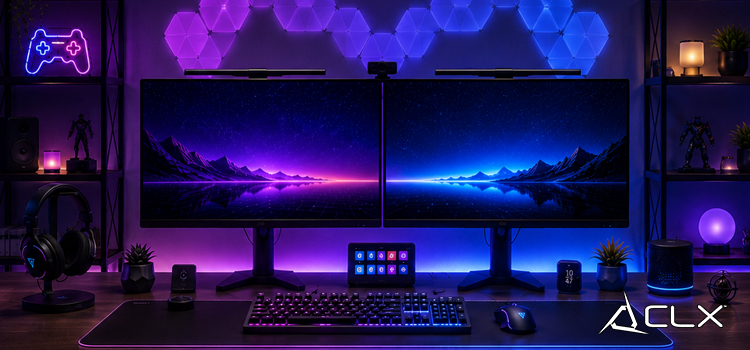
Brightness is the other big one. Your monitor should match the ambient light in the room. Gaming in a dark room with a bright screen is the fastest way to wear your eyes out. Either brighten the room or lower the screen. Blue light filters help here too. Most modern monitors include a low-blue-light mode, and Windows and macOS both have built-in night mode options.
Anti-glare screens are worth it if your setup gets direct light from a window or overhead fixture. They don't fix everything, but they reduce the constant micro-adjustments your eyes make to compensate for reflections.
Does hydration affect eye strain?
More than most people expect. Dehydration reduces tear production, and dry eyes fatigue faster. Keep water at your desk. Drink it.
Conscious blinking also helps. It sounds strange, but reminding yourself to blink fully (not half-blinks) during intense moments keeps your eyes lubricated.
What's the right viewing distance and posture?
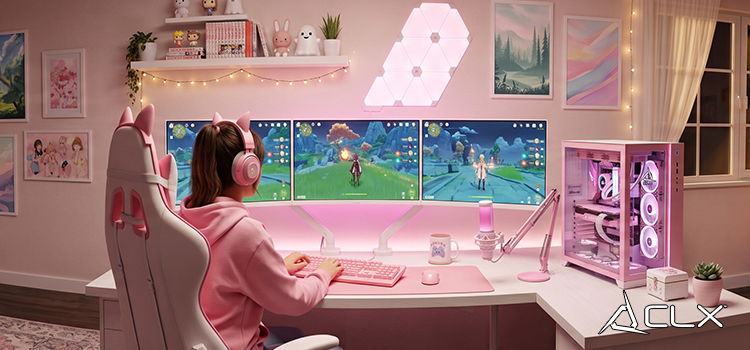
Poor posture creates neck and shoulder tension that often shows up as headache and eye fatigue. Sit with your back supported, feet flat, and monitor centered in your natural sightline. If you're craning your neck up or hunching forward, your eyes are compensating for the angle.
Protect your eyes, protect your sessions
Your eyes aren't going to get better mid-session. Build the habits now: 20-20-20, proper monitor distance, matched brightness, and water on the desk.If you're running long sessions on a high-refresh monitor, you need a machine that can push stable high frame rates. Head to CLXGaming.com to customize your next build using our configurator.