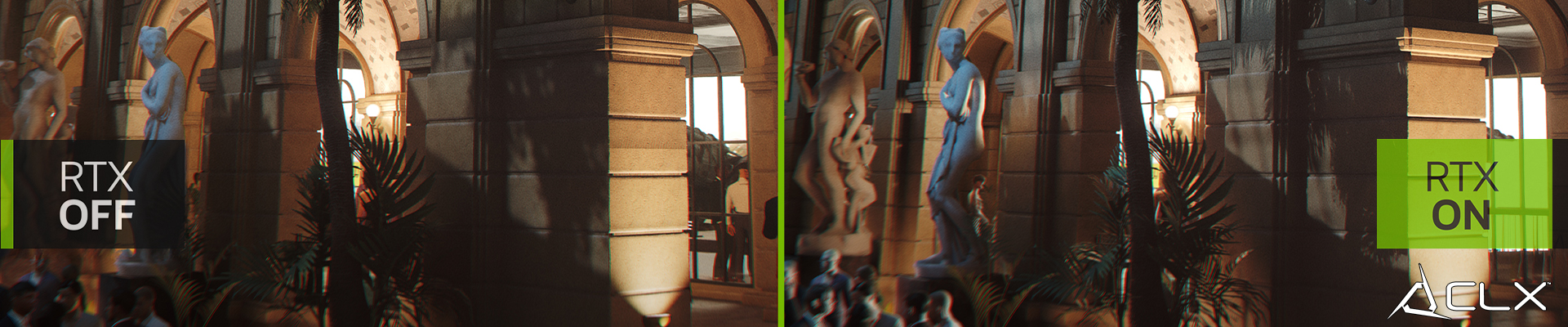
Most people think ray tracing just means 'shinier reflections.' That's part of it, but it misses what's actually happening under the hood. Old-school rasterization fakes light with a pile of clever shortcuts. Ray tracing skips the fakery and models light the way it behaves in real life. That's the whole difference, and it's why it costs so much to run.
How ray tracing simulates light
Rasterization figures out which objects are visible and paints them onto your screen using precomputed tricks for shadows and reflections. Those tricks look fine until you move the camera and the illusion breaks.
Ray tracing works backward from your eye. The GPU shoots rays out from the camera through each pixel into the scene. When a ray hits a surface, it figures out what color that pixel should be based on the light hitting that spot. If the surface is reflective, the ray bounces and keeps going until it finds a light source or gives up. That's how you get reflections that actually show what's behind you, and shadows with soft edges that match the light.
Rays, bounces, and pixels
Three things drive the whole process.
Rays are the lines traced from the camera into the scene. More rays per pixel means a cleaner image with less noise.
Bounces are how many times a ray reflects before the GPU stops following it. One bounce gets you basic reflections. More bounces get you reflections inside reflections, plus light bleeding from one surface onto another (global illumination). Each extra bounce multiplies the math.
Pixels are the finish line. A 4K screen can have about 8.3 million pixels, and each one needs rays traced through it, every frame. At 60 fps that's a staggering amount of calculation per second.
That math is why ray tracing tanked framerates before dedicated hardware showed up. NVIDIA's RT cores and AMD's ray accelerators exist specifically to handle these calculations instead of dumping them on the general shader cores.
Where Ray Tracing stands now
Ray tracing isn't universal yet. Plenty of competitive shooters skip it because pros turn settings down for frames anyway. But for single-player games built around atmosphere it changes how the game looks in a way rasterization can't match.
The direction is clear. Each GPU generation adds more ray tracing horsepower, upscaling keeps getting better, and more engines bake it in by default. A few years out, ray tracing stops being the toggle you flip for screenshots and becomes the way games render light, period.
If you're speccing a build with ray tracing in mind, match the GPU to your resolution before you spend. Our PC configurator lets you pair a card to your target res so you're not paying for 4K path tracing on a 1080p monitor, or vice versa.